Camden In Fight of Its Life for Its Schools – Once Again
EDITOR’S NOTE: This story was produced as part of the South Jersey Emerging Journalists Project (SJEJP), an independent initiative dedicated to supporting content creators and emerging journalists from underserved communities across Burlington, Camden, Gloucester, Salem, Cumberland, and Atlantic counties.
By Charles Curtis III | South Jersey Emerging Journalists Project
CAMDEN — Just one year after the Camden City School District announced a projected $91 million deficit in April 2025, education advocates are successfully pushing back at proposed school closings and doing all they can to save a troubled district already under state control.
“In 1980, Camden had two comprehensive high schools and we had a district that probably had 11 or 12,000 students — In 2026, We will have about 8,000 students and 10 high schools,” former school board member Theo Spencer, a 1994 Camden High School graduate, told SJEJP.
With this as a backdrop, tensions between education advocates and the 7,100-student district came to a head in recent weeks, when the community pushed back at news that three magnet high schools — Big Picture Learning Academy (BPLA), Creative Arts High School, and Dr. Charles E. Brimm Medical Arts High School — were potentially merging into Camden High School.
In fact, the advocates pushed back so strongly that the state-appointed superintendent had to take back the plans. It was the latest development in years of troubles for the district in one of the poorest cities in the country.
Superintendent Alfanso Llano Jr. issued an April 20th letter posted to the school district’s website reassuring the public that the merger idea, shared at a public meeting, was a “concept currently being explored.” This was the second time in recent weeks that rumors circulated about closures, and the superintendent had to issue reassurances.
“As shared during the presentation, there are no changes to the current school structure. There are no school closures being proposed,” wrote Llano, who took over the superintendent’s job in March after a January appointment by former Gov. Phil Murphy.
“Each school will continue to operate and maintain its identity, history, and program focus. All specialized programs—arts, medical, business, and career—will remain in place,” wrote Llano, former Vineland superintendent.
Amid the chaos, the Camden City School District finds itself once again facing uncertainty concerning the future of public schools. Camden is among 15 school districts nationwide under state control, and even after 13 years under that control, the district still faces a declining student population, a budget shortfall, and ongoing tensions between teachers, parents, and district officials.
Earlier this year, when rumors circulated that schools might close in this city of 71,000 four miles east of Philadelphia, the Camden Education Association, the Camden Parent and Student Union — groups that advocate for teachers, parents, and students — began meeting and planning to advocate for schools to remain open and properly funded.
At the center of the crisis is the groups’ collective concern about the effectiveness of policies like the Urban Hope Act — a state law passed in 2012 that supports charter schools and what are known as “renaissance schools,” schools that are similar to charter schools but receive higher funding and focus on neighborhood enrollment.
Many public school advocates worry that such schools represent an abandonment of efforts to improve public institutions.
On March 10, amid the turmoil, Llano reassured teachers and staff by internal email that there would be no school closures.
“We are aware that rumors have been circulating in the community suggesting that schools in the Camden City School District will be closing,” read the email obtained by SJEJP. “At this time, there are no plans to close any CCSD schools.”
And yet, a few weeks later, the school closure issue surfaced again, leading to the April 20th letter. All of it has been very confusing, said Ronscha Dickerson, president of the Camden Parent and Student Union, told SJEJP.
“You hear a rumor of 5 schools closing first. Then you hear, there’s no schools closing. Then you come back and hear, we’re closing 3 schools. That is a lot to ingest, so it was just disrespectful and distasteful to the wisdom of the Camden city community, our parents and our students,” Dickerson told SJEJP.
Llano did not respond to requests for an interview.
“The reality is, in a district this size, with the economic pressures that’s on the state, our public education system in the state of New Jersey is unsustainable,” said Spencer, the former school board member. “The problem is, there is not a lot of interest in dealing with these problems rationally.”
There are questions that need to be answered in order for Camden to educate its students well, he said.
“What is the minimum number of schools that we need to educate our children? And what is the proper structure in order to do that?” Spencer asked.
Efforts to help Camden schools over the years
Over the years, there have been several efforts to shine a light on the district’s problem and attract hep.
In the 1980s, the landmark case Abbott V. Burke in the New Jersey Supreme Court proved the existence of funding disparities in New Jersey schools. It mandated equality in funding, high-quality pre-K, and improvement of school facilities in 31 impoverished districts, including Camden. In 2005, a follow up analysis by the state Office of Legislative Services of the same districts found that although they received significant funding, they still experienced overwhelming financial burdens.
In 2012, New Jersey state lawmakers passed the Urban Hope Act, which many local public advocates have characterized as a first step toward school closures. A year later, former New Jersey Gov. Chris Christie, a Republican, announced the state takeover of Camden schools. The move was driven by persistently low test scores and graduation rates.
And yet, problems remained. Since 2013, 11 of the district’s traditional schools have closed and enrollment has dropped from 11,660 to 7,117. An analysis by New Jersey Policy Perspective, a nonpartisan think tank, showed that despite the state takeover, intended to help the schools, test scores were not improving.Today, the district has 16 schools.
By July 1, 2025, the district announced cuts that included the elimination of teachers as well as various support staff members. These included all 16 Family Outreach Coordinators (FOCs), school liaisons who direct parents to food assistance and other resources. Many mental health support staffers who provided social-emotional learning and therapy for students were also cut.
In June 2025, the district closed its last public middle school, forcing the remaining elementary schools to expand to include grades 6-8, and converting them to what the district calls family schools (grades K-8).
“The CEA (Camden Education Association) and the Parent and Student Union are collaborating to keep our public schools open,” Pamela Clark, CEA president, said during an association meeting in March to inform parents, educators, activists, and community stakeholders.
The groups collected signatures for a letter to encourage Gov. Mikie Sherrill, a Democrat, to explore how she might help keep Camden schools open.
“Davis (Elementary School), Forest Hill (Elementary School), Yorkship (Family School), Cooper’s Poynt (Family School), and Veterans Memorial (Family School) are all rumored to be closing,” Dickerson, who attended the meeting, told the room.
Another parent said her history with Davis Elementary School goes back years.
“I went to Davis. I have a kid who went to Davis. So when I heard that it might be closing, I had to get here,” said Rosie Rivera, 40, a lifelong Camden resident with three children in the school system.
“We were around the last time they tried to [close schools] and we said, ‘No,’ ” Rivera continued.
In the past year, the school district has had three superintendents. Llano replaced interim superintendent Davida Coe-Brockington, who served for six months following the July 1, 2025, resignation of seven-year Superintendent Katrina McCombs, who said it was time for a change.
The people who attended the March meeting celebrated Llano’s most recent communications, but some said they are hesitant to relax completely.
“I’d be more confident when the new budget comes out in May,” said Clark of the CEA. “The budget will have the final say.”
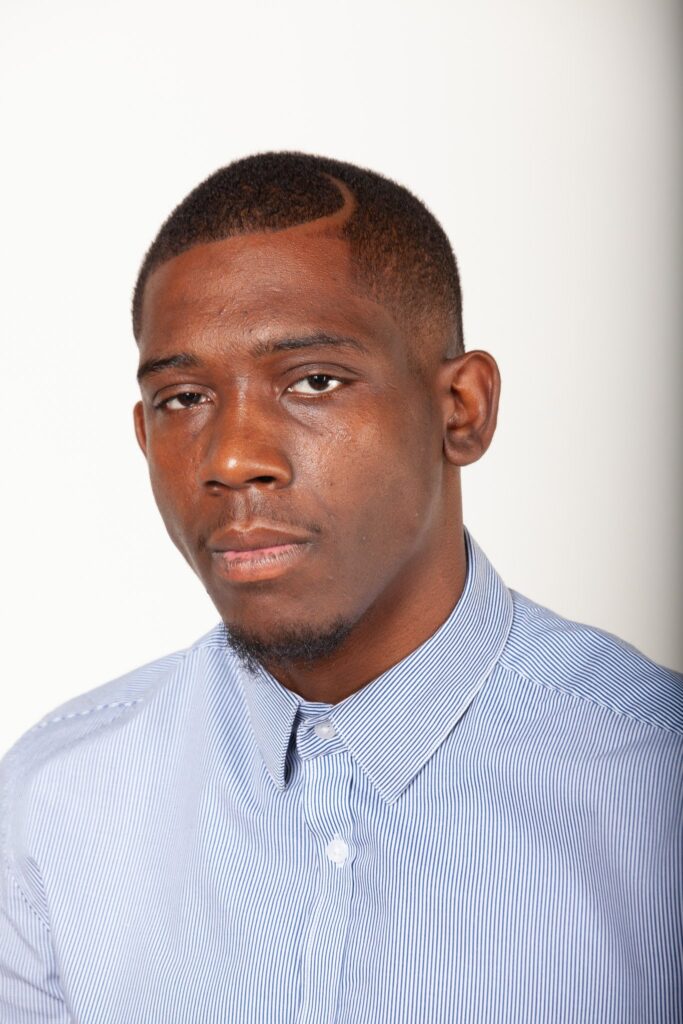
Charles Curtis, III, was Front Runner New Jersey.com 30 Under 40 honoree in 2025. He is a poet, songwriter, spoken word artist, freelance writer, and business owner, hailing from Camden. He can be reached via email at charlescurtisthethird@gmail.com.
Follow Us Today On: