Camden Environmental Group Files Lawsuit Against EMR Over Years of Fires and Pollution
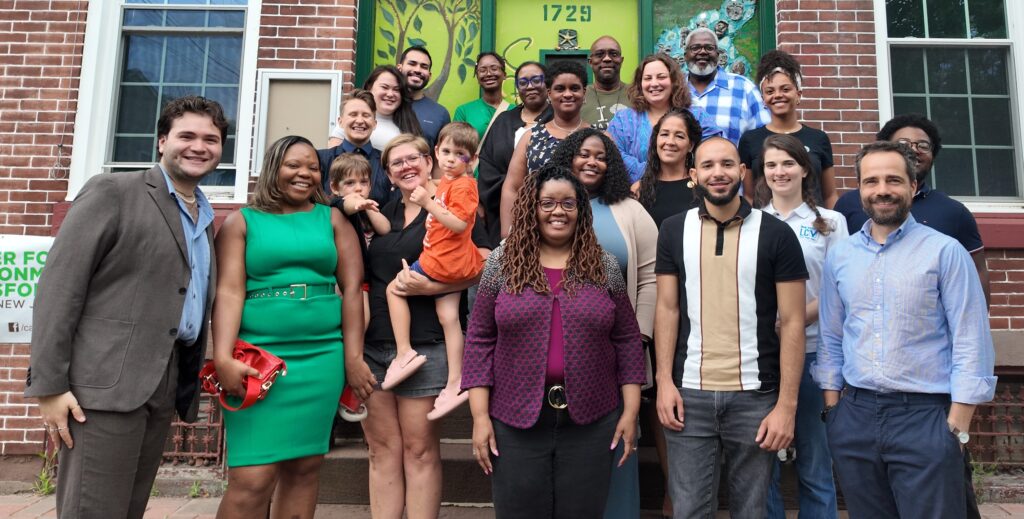
Photo of NJLCV, CFET, Shaneka Boucher, City Councilwoman Jannette Ramos and Environmental Tour attendees at CFET Building in Camden. Photo by Frank Santos.
BY FRANK SANTOS | For AC JosepH Media
CAMDEN — On Wednesday, Aug. 6, the New Jersey League of Conservation Voters (NJ LCV) made Camden the second stop on their statewide environmental justice tour.
Hosted in collaboration with the Center for Environmental Transformation (CFET), the event spotlighted local environmental concerns and highlighted how policy, education, and public action intersect in the fight for cleaner air and safer communities. The event’s most significant announcement came when CFET revealed it had filed a lawsuit that could change the dynamic between Camden residents and one of the area’s largest polluters, EMR, the scrap metal recycling facility that caught fire in February of this year.
Backed by the Eastern Environmental Law Center (EELC), CFET’s lawsuit names both EMR and the New Jersey Department of Environmental Protection (DEP), citing a pattern of neglect and inadequate regulation. Since 2016, EMR’s South Camden facility has experienced at least six fires — each forcing neighborhoods to evacuate or shelter in place as smoke laden with burning plastics, fuels, and metal residues filled the air.

Photo of one of EMR facilities in Camden. Photo by Frank Santos.
EMR operates multiple scrap metal sites along Camden’s waterfront, collecting and dismantling vehicles and storing massive piles of scrap metal and “fluff” — the toxic non-metal residue left over from shredding cars. This material can contain gasoline, oil, plastics, foam, mercury switches, batteries, and other components contaminated with lead, cadmium, PCBs, and more. CFET and EELC argue that because of the nature of this fluff, EMR should be regulated as a solid waste facility under New Jersey’s Solid Waste Management Act — a designation that would subject the company to tighter oversight and safer operating standards to protect the surrounding community.
Residents in Waterfront South have endured far more than repeated fires. Many report daily exposure to particulate emissions, volatile organic compounds, dust, noise, and heavy trucking. At the event, CFET’s Executive Director, Jon Compton, delivered an extensive presentation on Camden’s broader environmental concerns, linking air quality issues, flooding vulnerability, and unchecked industrial operations impacting the neighborhood.

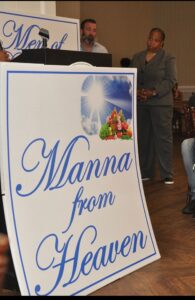
Photo of Shaneka Boucher speaking at NJLCV Event at CFET Building, Photo by Frank Santos.
Shaneka Boucher, founder of Social Responsibility Through Me, also spoke during the event. Her organization works to connect young people from underserved communities with meaningful opportunities to grow into leaders. Through hands-on support, partnerships with local groups, and access to vital resources, they aim to give youth the tools and network they need to create change in their own neighborhoods.
She described living conditions that no community should have to endure. “If you’re here in this community today, you’re inhaling raw sewage and air pollution,” Boucher said. “I have an air monitor on my house because I respect the DEP but can’t solely rely on them for those records. People are mightier than corporations when we’re together.”

Photo of one of Maggie Broughton, Environmental Justice Staff attorney at NJLCV Event at CFET Building, Photo by Frank Santos.
Maggie Broughton, Environmental Justice Staff Attorney at EELC, characterized the lawsuit’s main objective succinctly: they want conditions in Camden to reach what she called a “status quo of no fires.” She explained that the suit seeks to enforce EMR’s prior commitments — such as enclosing facility operations to contain emissions, submitting a complete environmental health impact report to the city, and rearranging the site layout to ensure fire hydrant access.
This legal push follows the public release of a draft Memorandum of Understanding (MOU) between the City of Camden and EMR. Under that agreement, EMR pledged $6.7 million to support both environmental and community healing following a major fire in February 2025. EMR proposes to pay $3 million to the city for programs and services, plus $1.2 million into an environmental fund managed by an advisory committee. The remaining funds support operational changes at the facility.

Photo of City of Camden and EMR Metal Recycling’s 2025 Memorandum of Understanding, Photo by Frank Santos.
However, the proposed makeup of that advisory committee substantially limits community influence. The committee will consist of eight members, four of whom — including the chair — are EMR employees. That means community representation is minimal and lacks majority control, raising concerns among residents and activists who worry the fund may be directed in ways that serve EMR’s interests more than those of Waterfront South.
Operational changes outlined in the MOU include constructing a full enclosure around EMR’s main shredder and processing lines, installing updated fire suppression systems including aerial systems with heat-detection cameras, reorganizing site layout for improved emergency access, and funding a community air monitoring program. The company also committed to reducing its facility footprint by nine acres, tightening inspections of incoming materials, capping the height of shredding piles, and engaging in beautification projects such as biodiversity walls. These actions follow intense community pressure and widespread scrutiny of EMR’s environmental impacts.
CFET and EELC’s lawsuit emphasizes that this issue is larger than firefighting or pollution. CFET’s leadership insists that communities like Waterfront South — designated as an overburdened community — should not bear the disproportionate burden of industrial contamination. They aim to compel the DEP to fulfill its statutory obligation to regulate facilities like EMR under solid waste law and the Environmental Rights Act to protect all New Jersey residents equally.
While NJ LCV’s statewide tour proceeds to other communities, Camden’s stop has clearly elevated the conversation. A neighborhood that had long endured in silence is now asserting power in courtrooms, press rooms, and public forums. For many residents, the CFET-led lawsuit isn’t simply about legal recourse — it’s a pivotal opportunity to reclaim their right to clean air, safe streets, and a community that prioritizes their health and dignity.
Follow Us Today On:
Note from AC JosepH Media: If you like this story and others posted on Front Runner New Jersey.com, lend us a hand so we can keep producing articles like these for New Jersey and the world to see. Click on SUPPORT FRNJ and make a contribution that will go directly in making more stories like this available. You can reach Editor Clyde Hughes at chughes@acjosephmedia.com. Thank you for reading!
About Author