Vineland Puerto Rican Festival Celebrates 60 Years of History, Culture
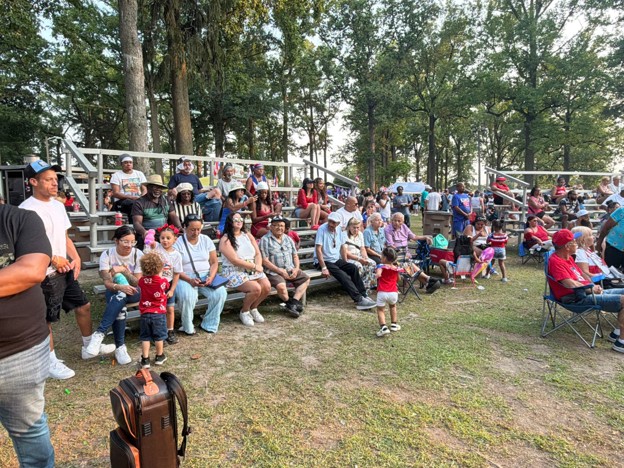
Photo courtesy of Justin Roig.
BY JUSTIN ROIG | For AC JosepH Media
VINELAND — The Vineland community celebrated its 60th anniversary of the Puerto Rican Festival last month with a week’s worth of festivities and programs filled with special events, food and music celebrating the Caribbean Island and culture.
The Vineland Puerto Rican Festival is one of the largest and best-attended events recognizing the Puerto Rican culture in New Jersey. The 60th celebration did not disappoint as people traveled to Vineland throughout the region to take part.
After World War II, Puerto Ricans began migrating in large numbers to the mainland United States, with many settling in major cities in the Northeast and Midwest such as New York, Philadelphia, and Chicago. A lesser-known fact of this history was the migration of Puerto Ricans to agricultural communities in the United States. Many came on contracts to work on farms, industries, and railroads.

Workers came to Vineland to work on farms and would eventually become a mainstay of South Jersey’s agricultural economy until the early 1990s. Many came from Barrio Angeles, Utuado, a coffee-producing town; others came from Ponce, Aibonito, Caguas, and other municipalities in the island’s interior.
By the end of the 1960s, Puerto Ricans had become 20% of Vineland’s population, graduating from farmwork; many had opened stores, pursued education opportunities not available in Puerto Rico, and found work in the city’s industries such as Kimble Glass and DeRossi Textiles.
The Puerto Rican Festival has its origins in the racially tense time of the 1960s, in which for Puerto Ricans faced housing discrimination, racially charged violence, and medical discrimination.
Many farmworkers faced wage theft, substandard living conditions, exposure to toxic chemicals, and other hazardous conditions. Bilingual services were limited, and many found little relief in healthcare at the city’s Newcomb Hospital, social services, and workplaces.

The festival created a space for Puerto Ricans to be proud, not embarrassed, of their culture and heritage. Until 1957, less than ten years before the first Puerto Rican Flag Raising in Vineland, it was illegal for Puerto Ricans to wave their flag under the island’s “Gag Law”, meant to repress pro-independence sentiments and organizing. It is in this context that we see why the flag is such a paramount focal point of today’s festivities.
With the festival spanning a whole week, it is one of the longest celebrations of Puerto Rican culture in the Diaspora. The festival is organized similarly to the Fiestas Patronales of the Island’s towns, where residents gather in the town squares to celebrate the municipality’s patron saint, often featuring rides, food vendors, games, famous artists, and other activities.
Leonides Negron, president of the festival committee, has been active with the Festival Committee since he was a teenager. He called on participants to become more involved in the festival, particularly the youth.
“The Puerto Rican Festival has to continue here at Landis Park for 60 more years,” Negron said. “I won’t be here, but I desire for this to continue. When I was very young, I learned to defend the Puerto Rican Festival, and I have done it with all my heart. That is why today my strength is weakening, but I want this to continue.
“I know it is hard, but we can do it with the help of God. I would like to welcome all of the dignitaries who are here and will be speaking to you today. They are all here to celebrate Puerto Rican Festival Week. Yesterday, from Puerto Rico we had Trio Los Condes. I saw so many young people here last night, and I am proud of them.”
It has not been easy to maintain the festival for 60 years. At times having contentious relations with the city, including a push by the city to move the festival to the county Fairgrounds, a discrimination lawsuit in 1996 which the festival won, and a global pandemic in 2020 and 2021.
The festival has brought world-famous musicians and groups such as Andres Jimenez in 2022, Plena Libre in 2025, and many other famous acts to a small city of 60,000.
The festival week began Sunday, July 19 with the Puerto Rican Flag raising at Vineland City Hall. Speeches were given by city and county dignitaries. Mayor Anthony Fanucci was not in attendance.
The speeches were followed by performances of Preciosa by Rafael Hernandez, the Star-Spangled Banner sung by Board of Education member Luz Vasquez, and La Borinquena, the national anthem of Puerto Rico. Folkloric music was also provided by Grupo Los Originales
Thursday’s youth night contained music, free haircuts, a foam machine, and a visit from former NFL offensive guard Jamil Demby. Demby’s great-grandfather Enrique Custodio was one of the founding members of the Puerto Rican festival committee.
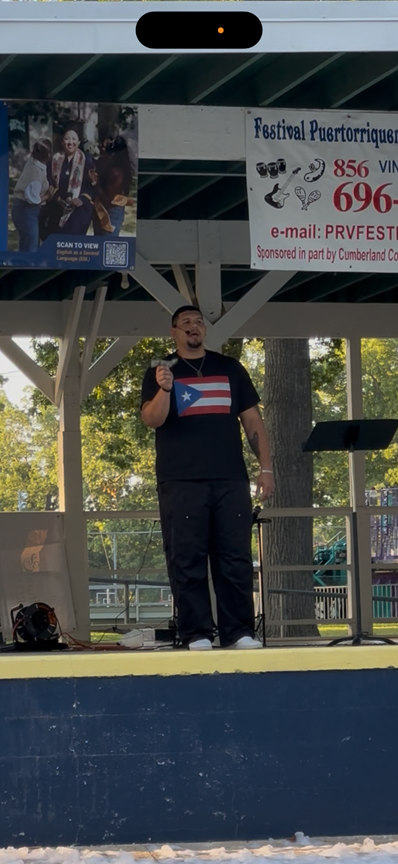
Friday’s folkloric night focussed on Jibaro Music, the music of the country people of Puerto Rico. Performances included singer Jose Nieves and his musical group as well as performances from local Vineland “Trovadores” or singers.
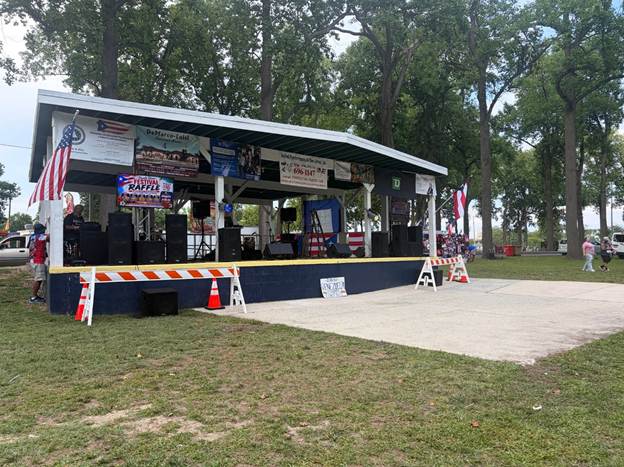
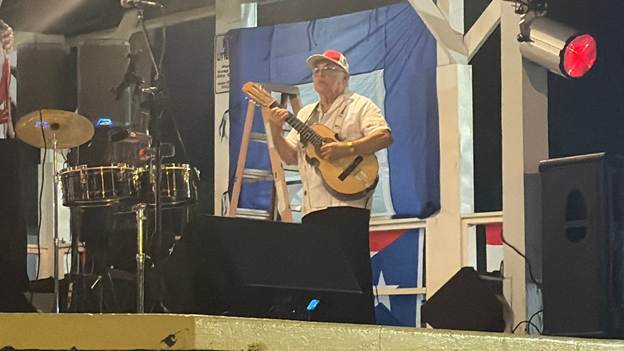
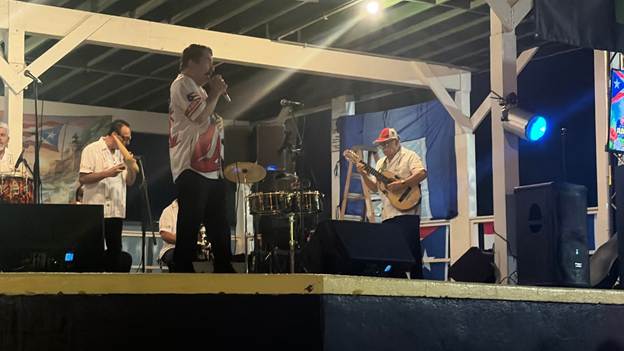
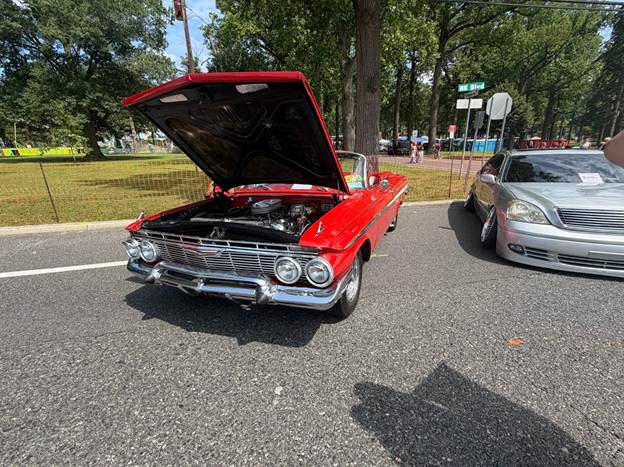
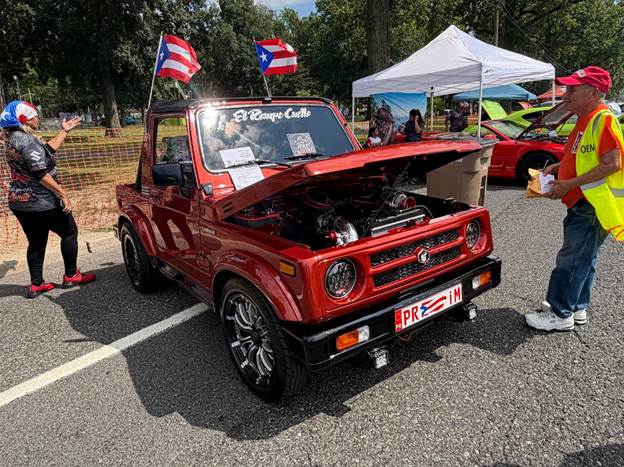
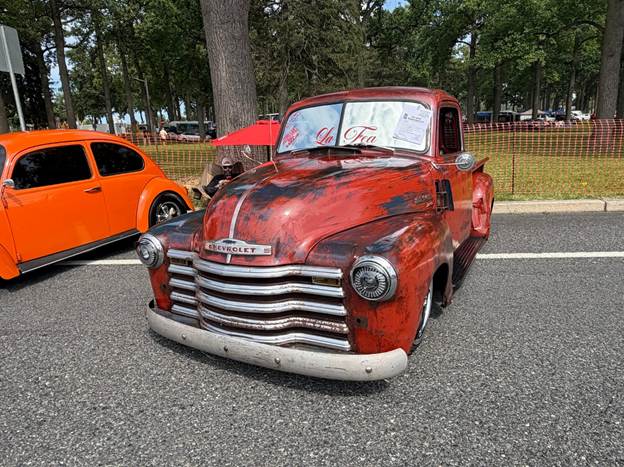
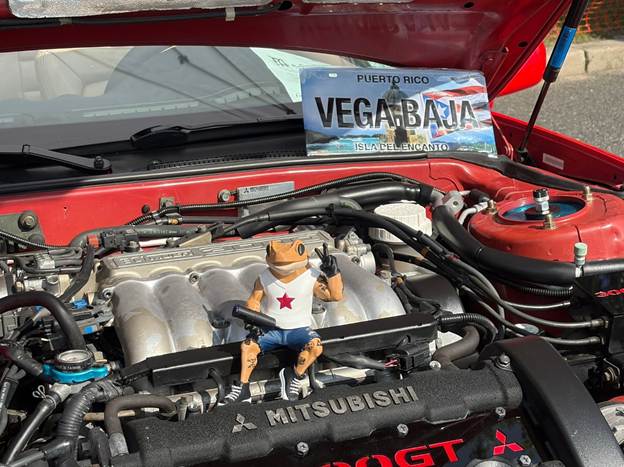
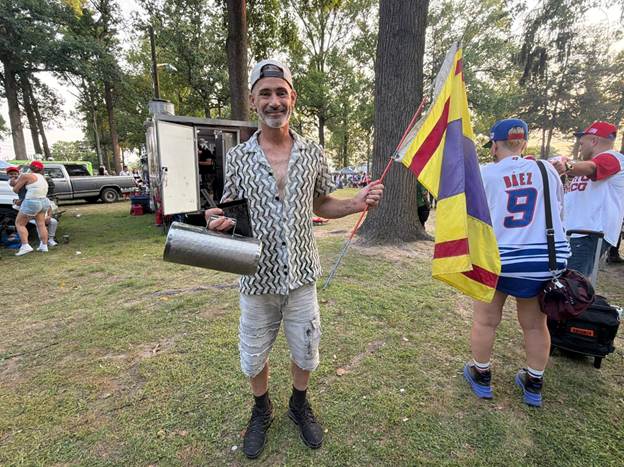
Saturday’s car show brought in vehicles new and old decorated in cultural regalia from as far as New York, Pennsylvania, and Delaware. Following the car show Trio Los Condes, a group which has been performing since 1959, performed throughout the evening with attendees dancing, sharing meals, waving flags, and playing dominoes.
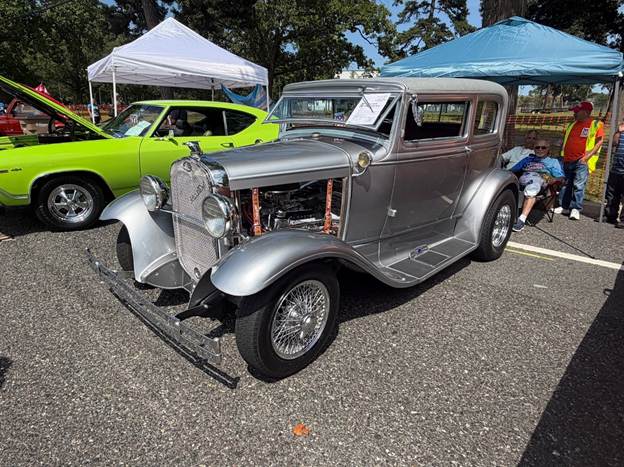
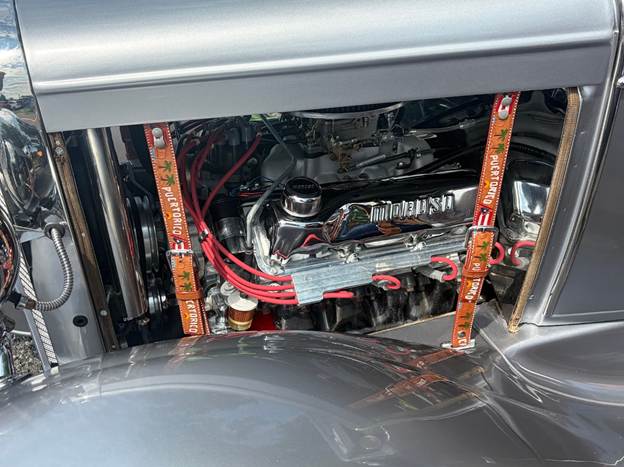
Sunday’s parade along Landis Avenue to Landis Park was joined by Lt. Governor Dale G. Caldwell, who was acting governor for the day.
Caldwell gave a speech later that day at the park:
“I am also the secretary of state so I oversee the Puerto Rican Commission. More than 21% of New Jerseyans are latino and one in five are Puerto Rican. This state admires the culture, the food, music, the dance, the community service and the entrepreneurship. So today I wanted to come out and today I’m actually acting governor, and there’s nowhere I’d rather be than right here.”
Following Caldwell speeches by Congressman Jeff Van Drew, State Senator Michael Testa Jr., Millville Mayor Dan Dixon, County Commissioner Yolanda Garcia-Balicki, and other dignitaries. A performance by the VHS dance team followed the speeches.
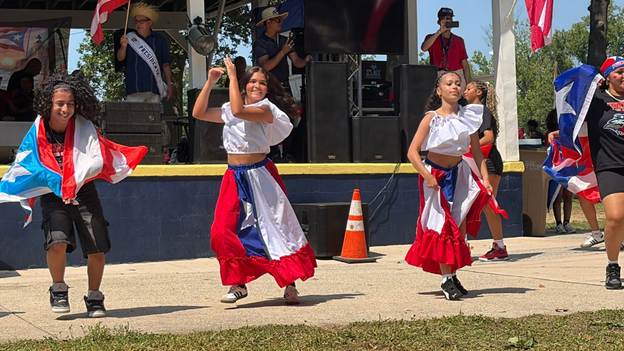
Thousands gathered at the park to watch the parade and celebrate the grand finale of the festival week. The Festival brings many Puerto Ricans from across the region to Vineland. Angel Luiz-Rivera of Camden being one of them. Luiz-Rivera attended today’s festival for the first time, and will be attending for years to come.
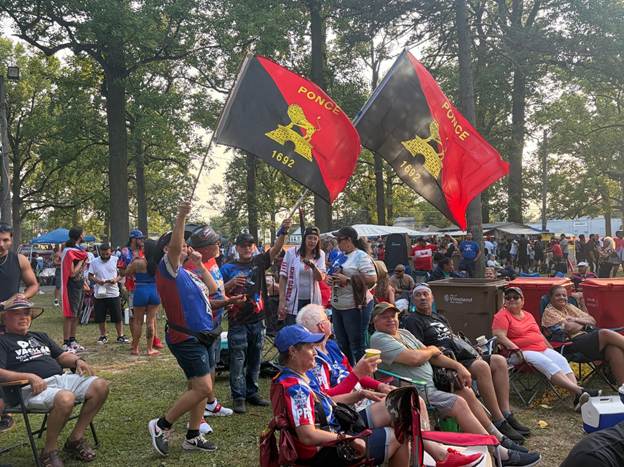
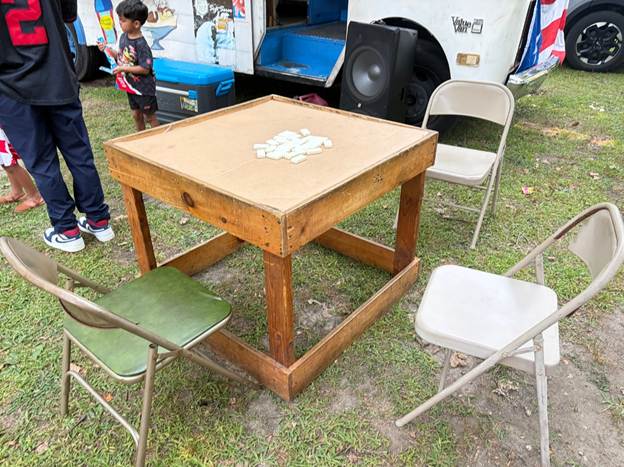
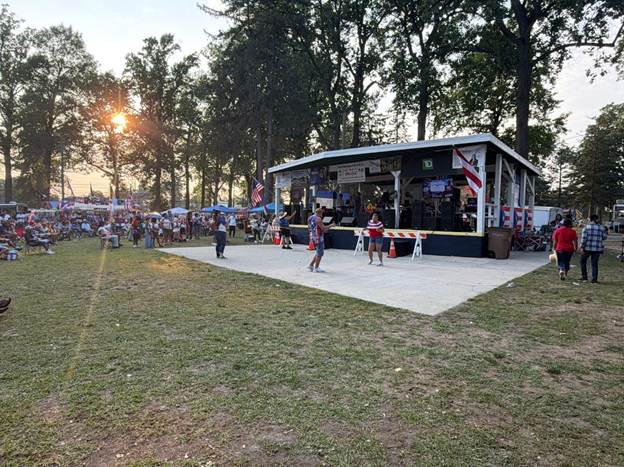
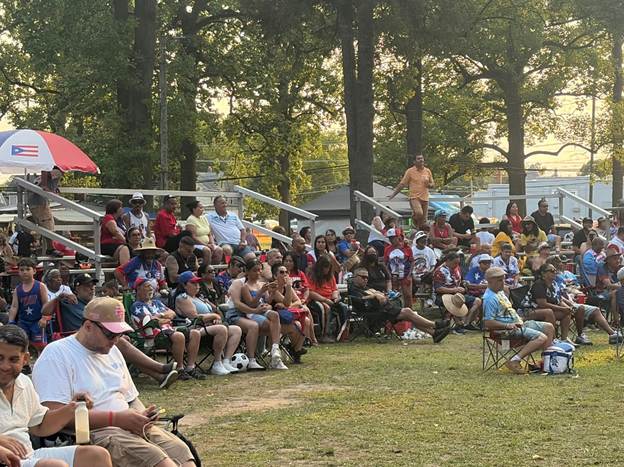
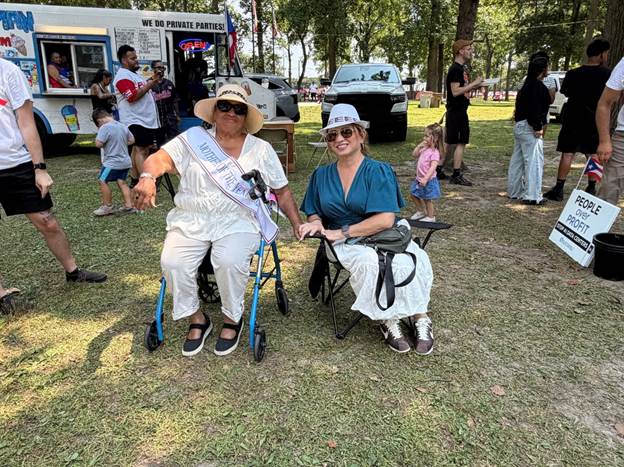
“I like everything. Everything. I like everything. Yeah, I like the parade. I like the people. I like the way everything is set up. I like the carnival for the kids separated from the you know me from the crowd and the dancing and all that, so it’s very organized, so it takes a lot of effort to put things like this”
Luiz-Rivera moved to Camden from Ciales in 1989; his father had told him of coming to work in Vineland as a farmworker when he was young. He spoke to the importance of maintaining the festival tradition.
“The next generation needs to know where they’re coming from, and what that flag means,” Luiz Rivera said. “I live in Ciales, which is a pueblo with a lot of coffee, we plant coffee beans, and that’s why I came to this place so I can show you, you know, where I’m from and what we’re doing in my hometown in Puerto Rico.”
The festival was cut short at 8:30 p.m. by Vineland Police after a number of fights had broken out amongst youths.
Gangsters Gone Godly, a partner organization that helps organize the youth night, issued a statement on Facebook proclaiming that this did not represent the festival as a whole and was emblematic of deeper issues in the community.
“What happened last night at the Festival Puertorriqueño de NJINC Vineland is NOT a reflection of our Festival or the people who sacrificed the last 9 months of their lives to give this community the ONLY FREE week-long festival around here. This festival isn’t just music and food. It’s about culture, family, faith, unity, our youth, and showing love to the entire community no matter what race you are!! It ends with one of the biggest Puerto Rican parades in New Jersey, bringing people from all over the state and even from our beautiful island. That’s what this festival represents.”
The group also said that the violence was emblematic of issues local youth are facing on a daily and only was given a spotlight due to the prominence of the Festival. The group called for community members to contribute positively to issues such as lack of mentorship and employment.
Today, around 30% of Vineland is of Puerto Rican heritage according to the City’s Historical Society. And despite a history of discrimination, economic crisis, and pandemics against the Festival and the Puerto Rican Community in Vineland, both have become core tenets of the city’s character, identity, economy and culture.
BIO: Justin Roig is a recent journalism graduate of Temple University where he won research awards while on campus. A native of Vineland, he has regularly freelanced for FRNJ on topics covering diversity and social justice. He can be reached at spanglishnewsnetwork@gmail.com.
Follow Us Today On:
Note from AC JosepH Media: If you like this story and others posted on Front Runner New Jersey.com, lend us a hand so we can keep producing articles like these for New Jersey and the world to see. Click on SUPPORT FRNJ and make a contribution that will go directly in making more stories like this available. You can reach Editor Clyde Hughes at chughes@acjosephmedia.com. Thank you for reading!
About Author