New Black Heritage Trail Marker Honors Macedonia Baptist Church’s Enduring Legacy in Cape May
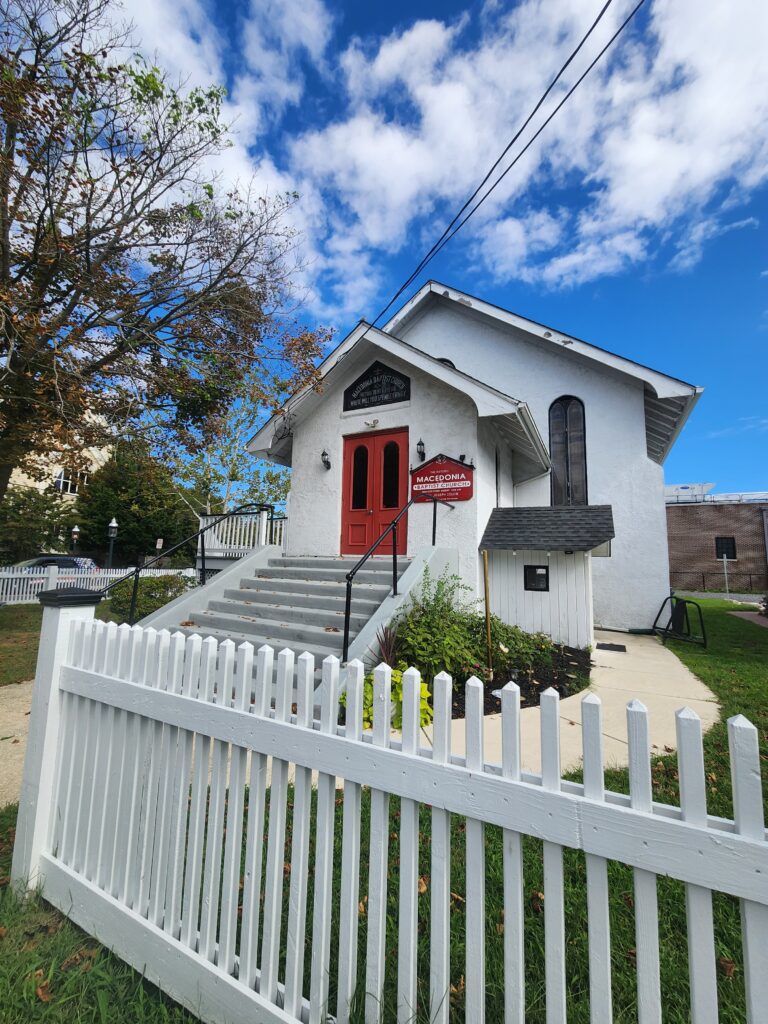
Photo by Meredith Winner, Mer-Made Photography.
AC JosepH Media
CAPE MAY — A powerful new chapter in New Jersey’s effort to preserve and elevate African American history was written this summer as Macedonia Baptist Church in Cape May received its official New Jersey Black Heritage Trail marker.
It was a recognition that cements the church’s role as one of the most important historic anchors for Black life in the county. Today, the church stands as one of the most prominent sites for Black culture in the state. While most Blacks have moved away from the seaside resort, its history continues to resonate.
The marker, unveiled during a community ceremony June 18 was attended by local clergy, civic leaders, and state officials, stands just steps from the church’s entrance, offering residents and visitors a permanent reminder of the generations who built, sustained, and shaped Cape May’s Black community.
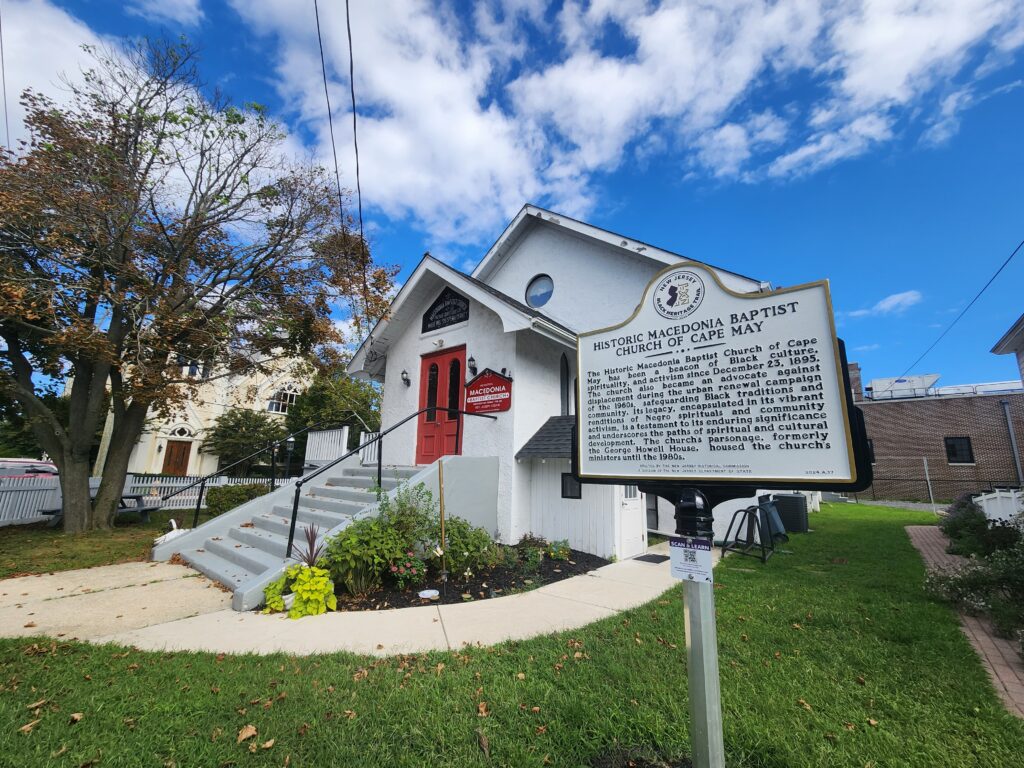
The New Jersey Historical Commission said that Historic Macedonia Baptist Church of Cape May played a “central role in the evolution of the Cape May African American community, offering a sanctuary for cultural preservation, social activism, and educational endeavors.”
“As it safeguarded African American traditions and spirituals, the church also became a frontline advocate during the urban renewal campaigns of the 1960s, championing the rights and voices of its congregation against displacement,” the commission said on Facebook.
It was Assemblyman Antwan McClellan, who is based in Cape May, who led the charge to create New Jersey’s Black Heritage Trail, back in 2022. He attended the June event.
For Cape May County — a region where African American history has often been overlooked or under-documented — the installation represents both acknowledgment and affirmation.
A Church That Carried a Community
Founded in the early 1900s, Macedonia Baptist Church has long served as a spiritual, cultural, and civic home for Black families in Cape May. Its sanctuary has hosted civil rights meetings, youth programs, community celebrations, and countless gatherings that strengthened the bonds of a historically marginalized population.


The church’s proximity to the Harriet Tubman Museum — located directly next door — adds even deeper significance. Tubman lived and worked in Cape May during the 1850s, raising funds to support her Underground Railroad missions. The museum and the church together form one of the most meaningful clusters of African American heritage sites in New Jersey.
The new marker highlights this intertwined history, ensuring that visitors understand the church’s role in preserving Black identity, faith, and resilience in Cape May.
Part of a Growing Statewide Movement
The New Jersey Black Heritage Trail, administered by the New Jersey Historical Commission, is expanding rapidly across the state. Its mission is to identify, commemorate, and promote sites connected to Black history — from abolitionist landmarks to cultural institutions, neighborhoods, and churches like Macedonia Baptist.

Cape May’s marker joins others recently installed in Atlantic City, Camden, Newark, and Trenton, forming a statewide network that tells a fuller, more accurate story of New Jersey’s past.
Local leaders say the Cape May installation is especially meaningful because it shines a light on a community whose contributions have often been overshadowed by the city’s tourism-driven identity.
“This marker ensures that the story of Cape May’s Black families — their faith, their leadership, their perseverance — will never be forgotten,” one community elder said during the ceremony.
A Moment of Pride and Purpose
The unveiling drew residents from across Cape May County, including members of long-standing Black families, youth groups, and local officials. Many described the moment as both celebratory and reflective — a recognition of ancestors who built institutions that still stand today.
The ceremony also underscored ongoing efforts to preserve African American heritage in the county, including revitalization work in Whitesboro, expanded Juneteenth programming, and partnerships with the Harriet Tubman Museum.
For Macedonia Baptist Church, the marker is more than a sign — it is a testament. It is a testament to endurance and a testament to community.
Follow Us Today On: