Michelle Azpiri: Bridgeton Public Library Has ‘Changed Lives’
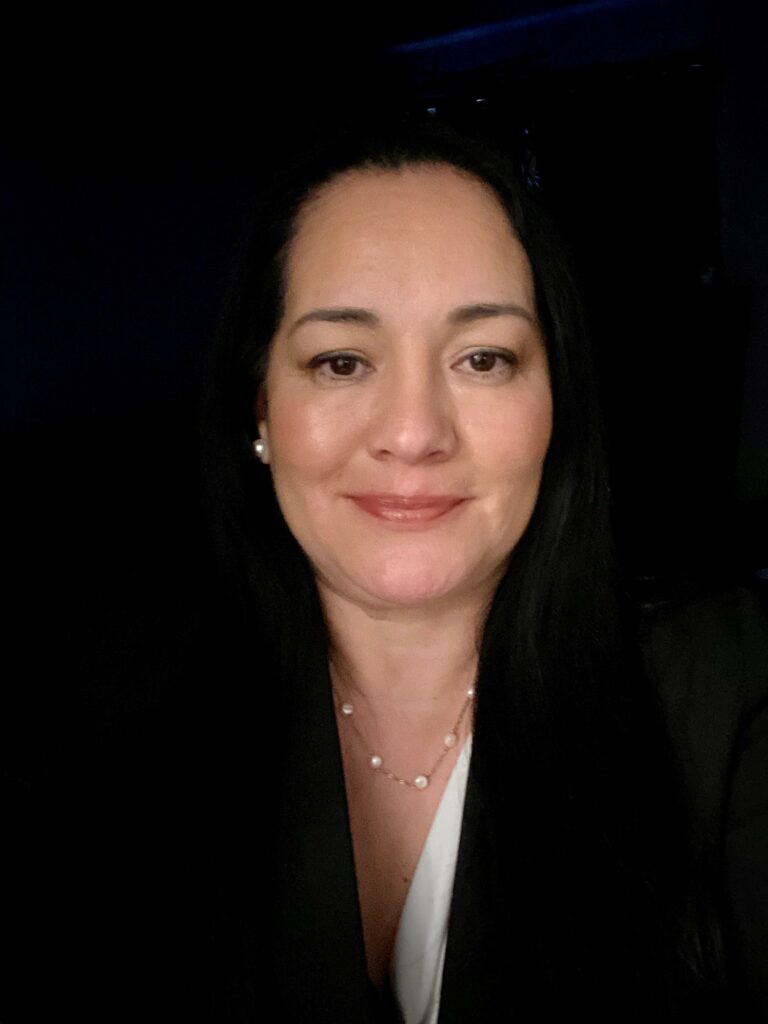
Photo courtesy of Michelle Azpiri.
City Voters in November Will Decide in November Whether To Close the Library as City Fights To Balance Its Budget
EDITOR’S NOTE: This story was produced as part of the South Jersey Emerging Journalists Project (SJEJP), an independent initiative dedicated to supporting content creators and emerging journalists from underserved communities across Burlington, Camden, Gloucester, Salem, Cumberland, and Atlantic counties.
BY MILAN PARKER | South Jersey Emerging Journalists Project
BRIDGETON — In an exclusive interview with Front Runner New Jersey, Michelle Azpiri, director of the Bridgeton Public Library, talks about stepping into a role that sat empty for three years, ways that the library has changed lives, and why residents packed a council meeting to keep the library’s doors open.
Voters in Bridgeton will decide on whether to keep the library open as the Bridgeton elected officials look for ways to balance its budget with limited options. Azpiri is also running for a spot on Bridgeton city council in November.
Q: Can you tell me about yourself and what led you to become director of the library?
Michelle Azpiri: I was recommended by someone to join the board of the library. I came to a meeting, met everyone, and was interested in joining, so I submitted my paperwork alongside Brittany Ingersoll who also works here now. We joined the board together, did our interview with Mayor Kelly and Councilwoman Rosemary De Quinzio – she’s also the council liaison to the library. They both were very excited to have us join the board so we both started in July 2024.
After our second meeting in August, I realized there was a strong need for me to start spending more time here, because the library had gone about three years without a director. So I started volunteering – easily 40 hours a week – putting policies into place, creating the financial reports that were badly needed. About a year later (September 2025), I was were able to get funding to actually get hired as director, and I stepped down from the board. Brittany started two weeks after me and did the same thing.
Q: You mentioned that the library went three years without a director. Could you walk me through that, and the impact it had on the library?
Michelle Azpiri: When the last director left, her salary had been paid by the city. The board president at the time was overseeing daily operations as best he could. He’s a teacher, so he couldn’t be here every day. He told me that the funding the city had given the library for the director’s salary, the city took back. They needed it for something else. After that, they never gave the budget back for the library to hire a director.
Q: It sounds like the city has been inconsistent in supporting the library for a long time. Do you think that’s accumulated over time?
Michelle Azpiri: They keep saying the city is in a two-million-dollar deficit financially, so obviously they’ve been struggling for a couple of years. I don’t think that amount of money happen in one year. I think it’s accumulative. Either way, it happened during their tenure. The money that used to come from their budget to pay the director is different from what pays our salaries now, which comes directly from the tax money homeowner residents pay that’s specific to the library. The city can’t use that money as per New Jersey state law, and that’s what allows us to keep everyone here paid.
Q: Would you say the challenges are primarily financial, or is there also a lack of support from the city?
Michelle Azpiri: The council has said on more than one occasion that it’s purely financial. That’s why they put the referendum on the ballot for residents to decide the library’s fate. As far as what I can control, I make sure I’m getting donations from other organizations throughout the year to help cover operating costs, because the library covers all of that itself. The city gives us very little — paper towels, toilet paper, minor supplies, less than $2,000 a year. Last year, they did pay for cleanup after a pipe burst and flooded part of the building, and they cover light bulb replacements through public works. But those are minor expenses.
Q: How do residents feel knowing their tax dollars support the library, and that it’s now at a risk of closing?
Michelle Azpiri: That’s the reason the community is so upset about the possibility of closing. They’re fine with the small contribution they make. It’s less than one percent of their taxes, actually only .53%. I’m a resident myself; I pay $79 a year toward the library. Some people pay $35, the most I’ve seen is about $103 a year. Everyone who’s reached out to me has said they’re more than happy to keep paying that.
Q: Many residents pay taxes that support the library, but may not know exactly what services it provides. What does the Bridgeton Public Library actually offer residents?


Michelle Azpiri: There’s a good mix. We have an ESL/SSL class starting in the next two weeks with Spanish speakers learning English and English speakers learning Spanish. Over 30 people have already signed up. We have a full slate of kids’ programming, [mainly] science and technology events that always draw a good turnout. I brought back teen programming focused on violence prevention, and we have a partnership with a local group, Games on the Go, that runs activities for teens here.
Since I’ve been here, foot traffic has grown a lot. In 2024 we had about 16,000 visits. In 2025, my first year, it’s already up almost 5,000 more — close to 21,000 — and it keeps growing as we add more programs. We even started a concert series for adults and seniors: jazz, old-school music, on Sundays. They love it.
Q: Hearing about all the foot traffic, I imagine that you’ve built real connections with a lot of the residents and visitors who come through. Is that part of why you do what you do?
Michelle Azpiri: Absolutely. When I was volunteering that first year, I was meeting everyone who came in. I sit up front; I’m not in the back office all day, even though I could be. I’m constantly in communication with people in the community, and that’s how I started adding services. People would come in and say, “I’m not good with computers, but I need to apply for housing,” or “I need to apply for unemployment,” and I’d sit down and help them myself. It kept building from there — people who owned a house or two and wanted to rent them out but didn’t know how to write a lease, so I’d write it for them. It just kept adding up.
There’s a gentleman from the Latino community I worked with for almost two months. He was out of work and struggling with online applications. I helped him through the process, and when he finally got the job, he came in and said, “I wouldn’t have gotten this without you.” That’s what it’s about for me. Every single person counts. It starts as one person, and it becomes more.
Just last week I helped a woman who’d been the victim of a violent crime. She had paperwork from the city she didn’ t know how to complete. I sat with her, went through it line by line, told her exactly which offices to go to and what to bring. I have local landlords who call me for everything now — they know to come to me. A lot of them are older, without family nearby who’d know how to help. It’s a pleasure to be that person for them.
Q: The Bridgeton Public Library seems like a lifeline for a lot of people. If it were to close, what would the impact be?
Michelle Azpiri: It would be very hard on people. There’s a gentleman who walks to the library from Colfax Street – no vehicle, uses a cane. He wouldn’t be able to make it to the county library, which is about a mile and a half away depending on where you live in the city. And regardless of distance, it’s a dangerous walk. People don’t have money for a taxi or Uber, and public transportation isn’t reliable enough to count on.
At the second reading of the referendum on July 21st, more than 100 people showed up to the council meeting to speak on behalf of the library. People talked about it being a sanctuary growing up, somewhere to get away from what was happening at home, and somewhere to read and study. One woman said her family lived in their car for a period, and her parents would bring her to the library just to have a few normal hours. High schoolers who’d just graduated talked about doing their schoolwork here. Hearing those stories [about] what this library has meant to people who’ve grown up in this city, it’s amazing. But the vote on the referendum still came back unanimous against keeping the funding.
How to Support the Bridgeton Public Library
Bridgeton City Council has introduced an ordinance that would ask city voters whether the Bridgeton Public Library should be dissolved. If the proposal advances through the required municipal process, the question is expected to appear on the November 3 ballot.
Services the library frequently offers include assistance with job applications, unemployment paperwork, résumés, passport applications, leases, powers of attorney, printing and copying, bilingual assistance and more.
Depending on their ward and district, voters can go to Bridgeton Senior High School, the Salvation Army Community Center, Quarter Mile Lane School, or the ALMS Center to vote. The 2026 General/School Board Election is Tuesday, Nov. 3, 2026, with polls open from 6 a.m. – 8 p.m. Early voting runs from October 24-November 1. Residents can check their specific polling location at https://cumberlandcountyvotes.com/voters/polling-places/city-of-bridgeton/.
Follow Us Today On: